

Rare Disease Trap
Exotic condition with few matching symptoms; wrong unless multiple specific features are present.
Master SBA question technique and clinical reasoning for UK medical exams


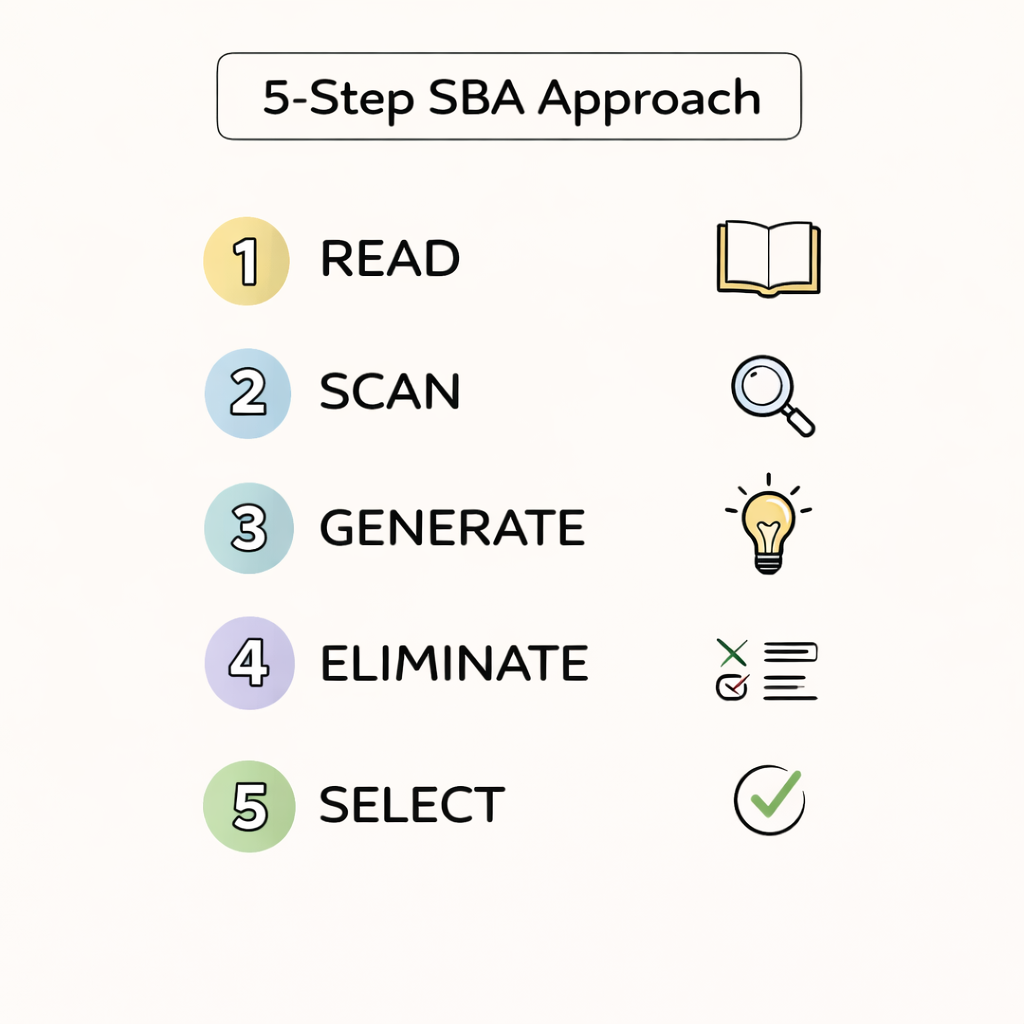
SBA questions present a clinical scenario followed by five plausible options. Only one option represents the single best answer based on the information provided.
Unlike older MCQ formats, SBA questions:
The challenge is identifying the best answer, not just a possible one.
Although often grouped together, these formats test different skills.
Modern medical exams increasingly favor SBAs because they better reflect real clinical decision making.
Understanding what the question is actually asking is more important than memorizing content.
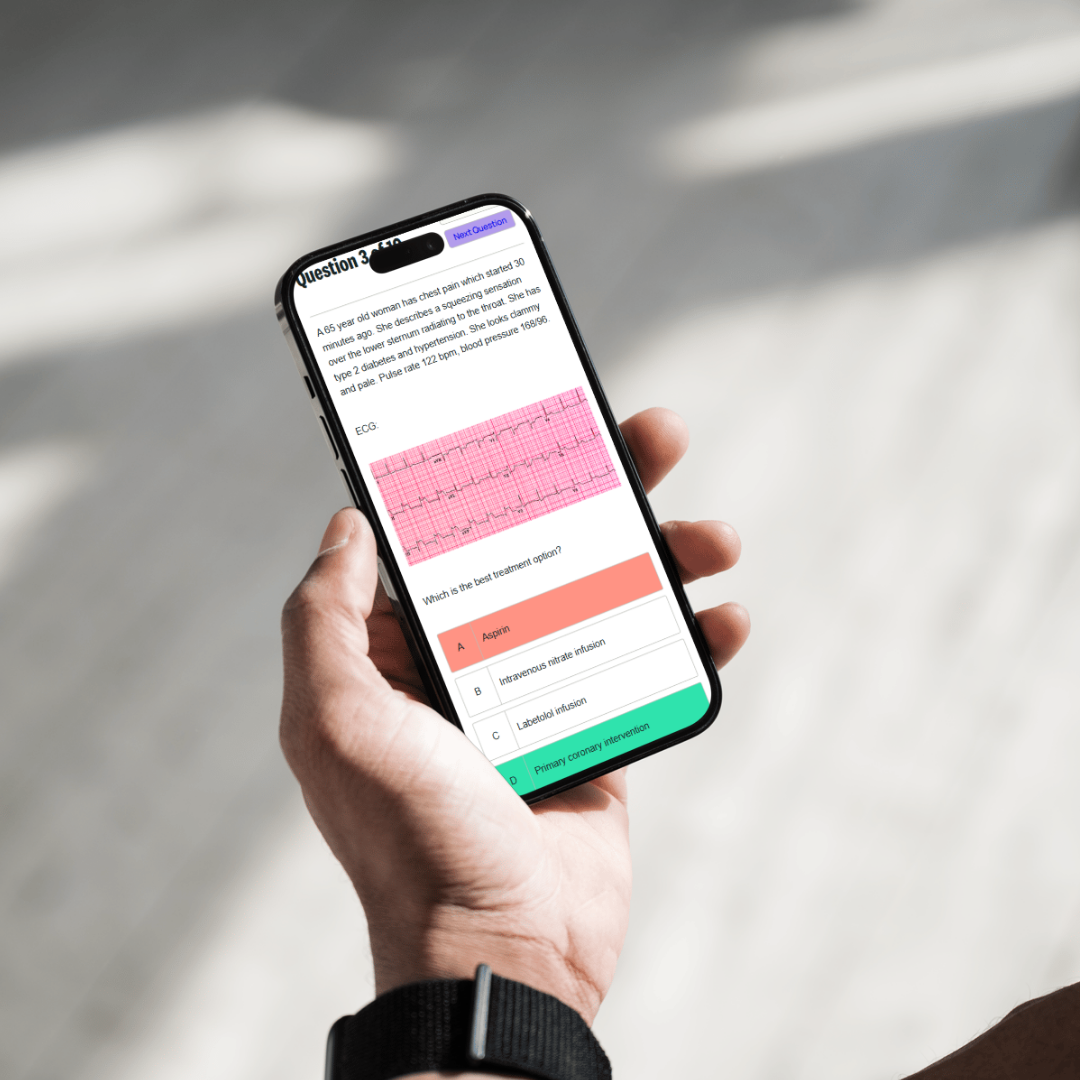
A 65 year old woman has chest pain which started 30 minutes ago. She describes a squeezing sensation over the lower sternum radiating to the throat.
Primary coronary intervention
Exotic condition with few matching symptoms; wrong unless multiple specific features are present.

Advanced investigation or referral before basic clinical assessment is completed.

Factually correct statement that does not answer the specific clinical question.

Option that delays treatment or misses red flags requiring urgent escalation.

Expensive test when examination or conservative management is sufficient.
Time pressure is a major factor in SBA performance.
Effective strategies include:
Timed SBA practice questions help develop this skill.

SBA questions are used across all major specialties, often integrating multiple systems.
Chest pain, arrhythmias, heart failure, acute coronary syndromes.
Breathlessness, infection, asthma, COPD, investigation interpretation.
Localization, stroke syndromes, seizures, acute presentations.
Abdominal pain, liver disease, GI bleeding, inflammatory bowel disease.
Risk, diagnosis, management, and legal considerations.
Prioritization, acute management, patient safety.
Clinical knowledge with risk assessment and decision making.
Age specific presentations, safeguarding, and acute illness.
Acute abdomen, post-operative complications, escalation decisions.
• Chest pain: Distinguish ACS, PE, aortic dissection, pneumothorax
• Breathlessness: Differentiate heart failure, COPD, asthma, PE
• Acute abdomen: Recognize appendicitis, perforation, ectopic pregnancy
• Headache: Identify meningitis, SAH, temporal arteritis red flags
• Confusion: Assess delirium, sepsis, hypoglycemia, stroke
• Collapse: Evaluate syncope, seizure, arrhythmia, PE


Modern exams assess skills as well as knowledge.
Require synthesis of history, examination, and investigations.
Test understanding of blood results, ECGs, ABGs, and trends over time.
Use X-rays, CT scans, MRI, and ultrasound in clinical context.
Emphasize dosing, contraindications, interactions, and safety.
Assess consent, capacity, confidentiality, and professional judgement.
Test appropriate responses to patients, relatives, and colleagues.

Pattern recognition from history, examination and basic investigations.
Gold standard tests, risk stratification, and cost-effectiveness.

NICE pathway adherence, escalation thresholds, and patient safety.

BNF dosing, contraindications, monitoring, and interactions.

Appropriate responses to patients, relatives, and colleagues.

GMC guidance on consent, capacity, confidentiality, and safeguarding.

Quality SBA banks feature clinician-written questions, realistic vignettes matching exam complexity, detailed explanations citing UK guidelines, regular updates with guideline changes, and balanced specialty coverage.
SBAs test clinical judgment and prioritization rather than factual recall. MCQs offer clearer right and wrong answers, while SBAs present multiple plausible options and require the single best choice.