

Active Recall
Retrieval practice strengthens memory 50% more than passive reading.
Choose question banks that develop clinical reasoning and identify knowledge gaps effectively


Question banks transform passive reading into active recall testing. They identify knowledge gaps through performance tracking and wrong answer patterns. Banks simulate exam conditions through timed tests and full-length mocks. Quality explanations teach clinical reasoning beyond memorizing correct answers.
• Clinician-authored questions reviewed by specialty consultants
• Clinical vignettes matching real exam complexity and length
• Explanations citing UK guidelines with specific page references
• Content updates reflecting guideline changes within 3 months
• Performance analytics tracking specialty and skill weaknesses
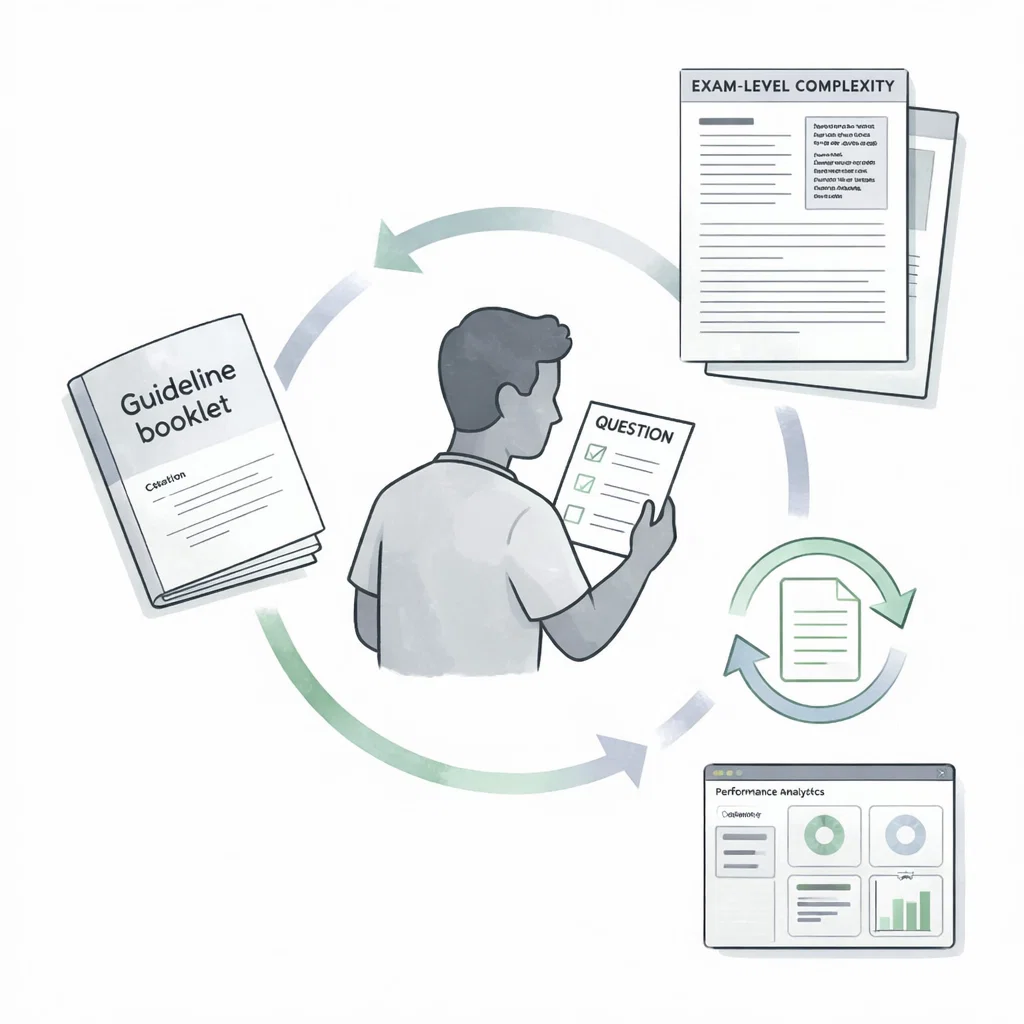
Retrieval practice strengthens memory 50% more than passive reading.

Performance data reveals weak topics requiring focused revision.

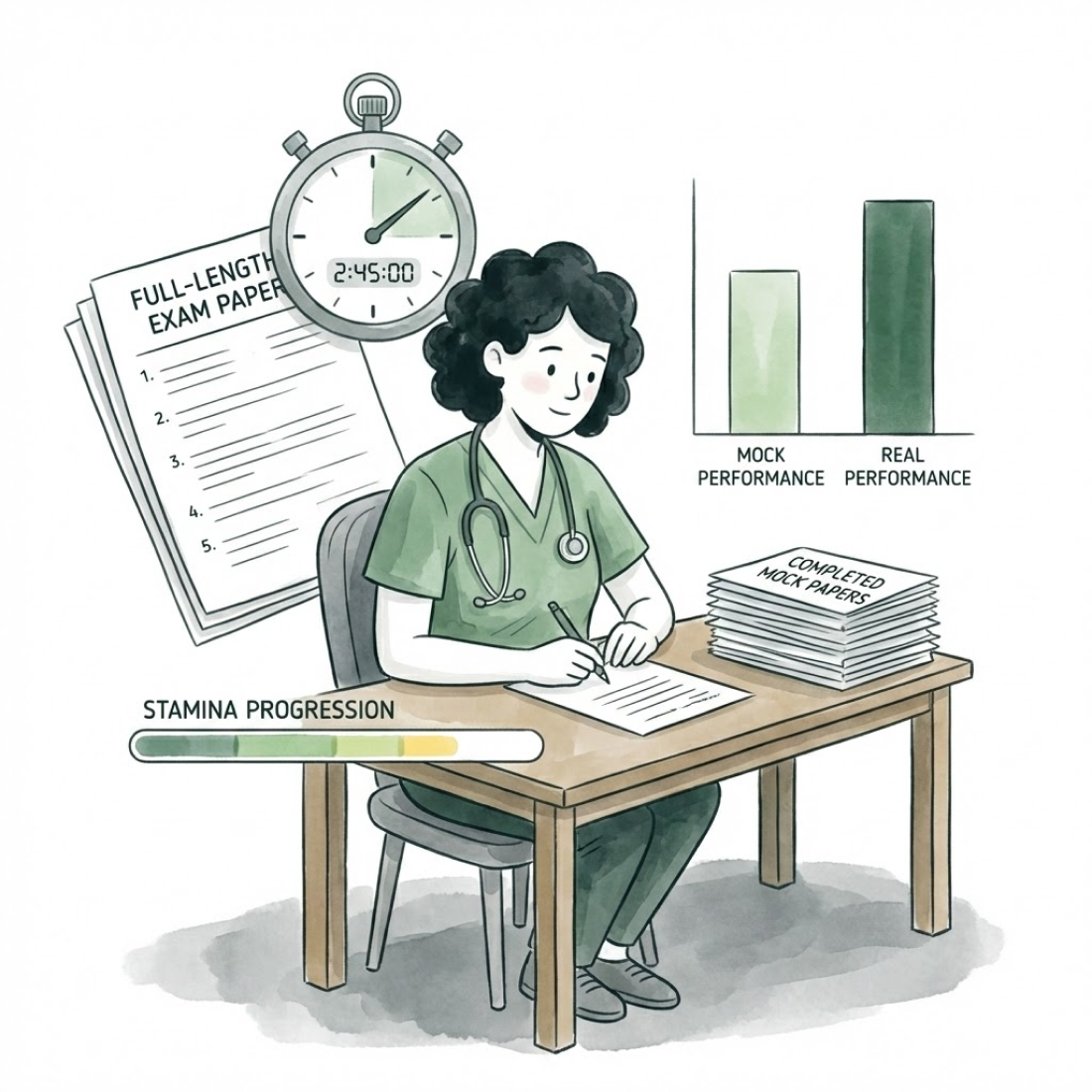
Timed practice builds stamina and reduces exam-day anxiety significantly.

Revisiting questions over time improves long-term retention by around 60%.

Modern medical question banks increasingly use adaptive learning.
This allows:
Personalized medical revision improves outcomes for most students.


Scores below 60% in any system require focused revision blocks.

Weak diagnosis needs pattern recognition; weak management needs guidelines.

Plateau after 1,000 questions signals need for a different revision approach.

Repeated mistakes on presentations indicate conceptual gaps requiring review.

When comparing platforms, consider:
A focused platform often outperforms broad, generic banks.
Quality question banks include full-length timed mock exams matching real exam structure. Mock exams assess stamina, time management and exam technique under pressure. Students completing 3+ mock exams often score 15-20% higher than those doing questions only.
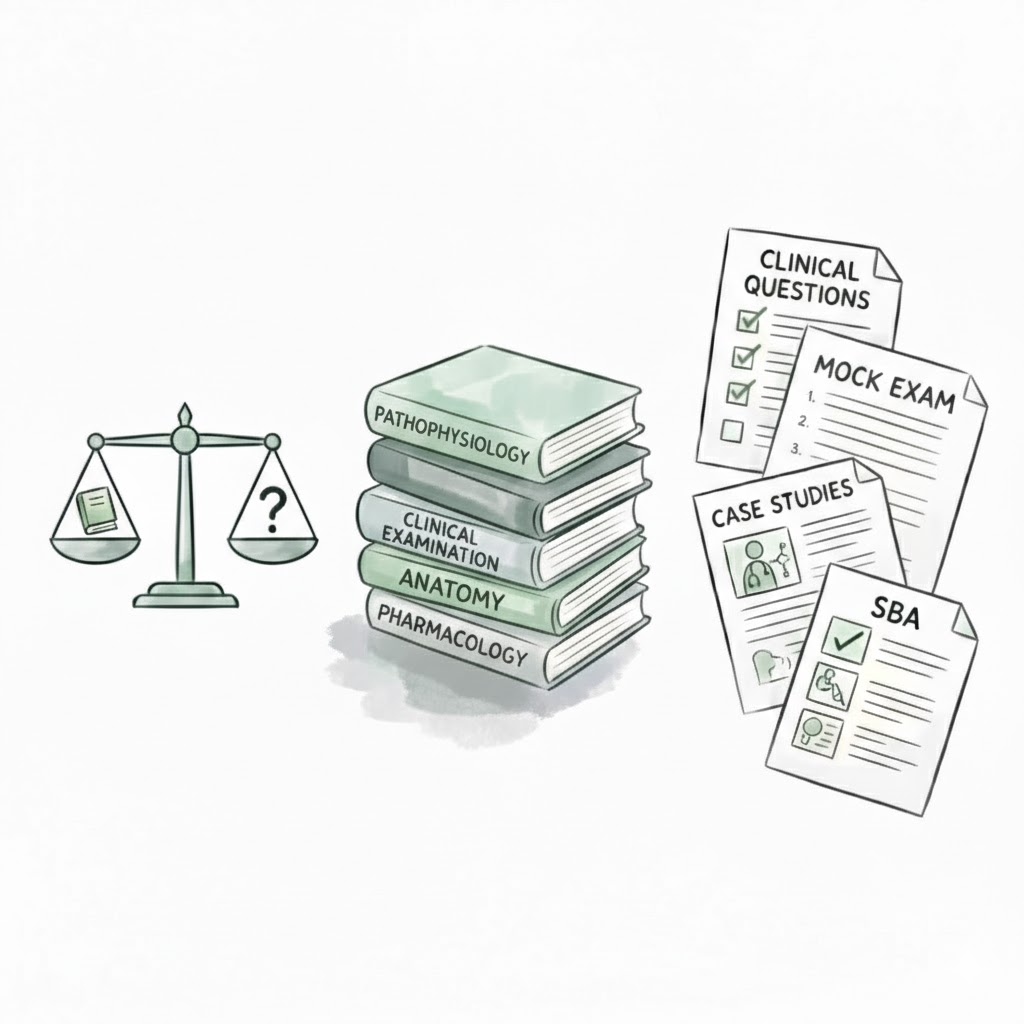
Question banks cannot replace foundational textbook learning. Use questions after mastering basic pathophysiology and clinical examination. Questions work best for final-year students with existing knowledge frameworks.
• Verify UKMLA alignment through MLA Content Map coverage
• Test explanation quality using free trial questions
• Check analytics depth for system and skill tracking
• Confirm UK guideline citations (NICE, BNF, GMC)
• Evaluate interface usability and mobile accessibility

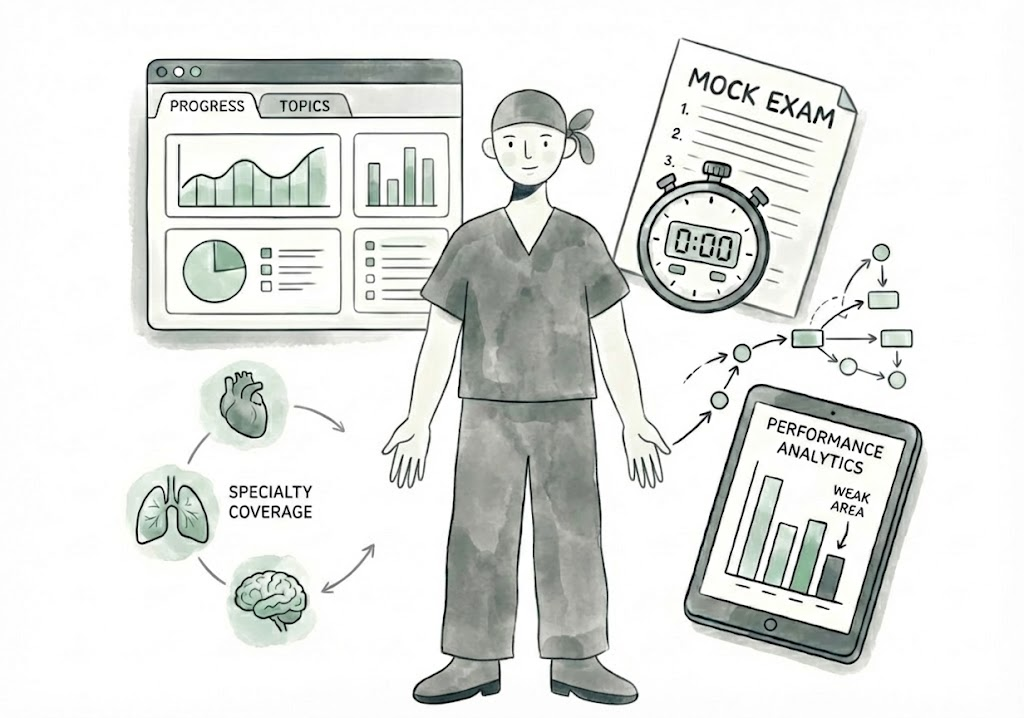
SingleBestAnswer provides SBA-style clinical questions written by UK clinicians. The platform offers expert explanations focused on clinical reasoning, specialty and skill coverage across UKMLA curriculum, adaptive revision identifying weak areas, and timed mock exams matching UKMLA format.
Quality banks feature clinician-written questions, realistic clinical vignettes, detailed explanations citing guidelines, regular content updates, and performance analytics. Question volume matters less than reasoning accuracy.